Effects of Kidney Disease in Pregnancy
In women with chronic kidney disease, there is commonly a co-occurrence of maternal hypertension, proteinuria, and recurrent UTIs. The relative contribution of each of these variables to unexcellent pregnancy outcomes is not always clear. All factors seem to be, however, harmful to the fetal outcome, both alone and collectively.
Some effects
- Difficulties for the mother
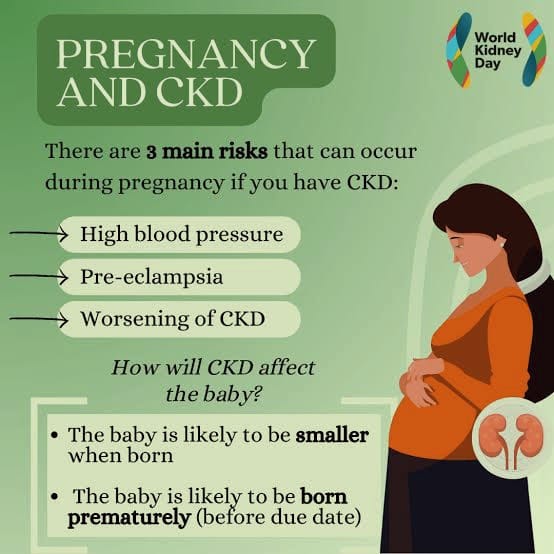
- Pregnancy itself can occasionally make chronic kidney disease (CKD) worse. CKD frequently causes hypertension. Elevated blood pressure can worsen kidney damage and raise the chance of preeclampsia, a dangerous disorder marked by damage to other organs and elevated blood pressure.
- Urinary protein is frequently an indicator of renal impairment. A higher level of proteinuria during pregnancy might be a sign of declining kidney function.
- Fluid retention brought on by renal failure can cause edema in the hands, face, and legs. Additionally, fluid retention may be influenced by pregnancy.
- Electrolyte imbalance in the body can be impacted by chronic kidney disease (CKD). It is important to keep an eye on and regulate electrolyte levels when pregnant.
- Difficulties for the Unborn(fetus)
- A higher chance of an early birth in women with chronic kidney disease. The infant may have a number of health problems as a result of preterm delivery.
- Mothers with chronic kidney disease (CKD) may increase the risk of low-birth-weight babies.
- Pregnancies including CKD are at risk for preeclampsia. There may be severe repercussions for the mother and the child.
- A higher chance of developmental problems for the fetus in severe cases of chronic kidney disease (CKD), if there is a major impairment in renal function.
- Control and Attention
- Women with CKD who are pregnant need to be closely watched during the whole pregnancy. This entails routine examinations, blood pressure checks, and lab work to evaluate kidney function.
- In order to protect both the mother and the unborn child during pregnancy, some CKD drugs may need to be modified or amended.
- An essential component of treatment is controlling blood pressure. Reducing the risk of problems can be achieved by controlling hypertension.
- To meet the complicated medical demands during pregnancy, women with chronic kidney disease (CKD) should receive treatment from a multidisciplinary team that includes obstetricians, nephrologists, and other experts.
Effects of Kidney Disease on Your Child
Children develop renal disease when their kidneys are damaged and unable to adequately filter waste materials and extra fluid from the circulation. This damage can be quick and transient (acute) or long-lasting (chronic), and it can stem from a variety of sources.
Although pediatric kidney disease is uncommon, the diseases can be very upsetting and emotionally taxing on the affected youngsters.
- High Blood Pressure, or Hypertension
- Anemia
- Cardiovascular Disease, or Heart Disease
- Electrolyte Imbalances in The Blood, Especially Potassium
- Issues with Growth and Development
- Issues with Bone Health
- Increased Susceptibility to Infections
- Problems with the Nerves
Other effects of kidney disease on children life include behavioral, interpersonal, and self-esteem issues. Children with chronic kidney disease (CKD) may have trouble focusing, learn more slowly than their classmates, and acquire language and motor abilities more slowly.