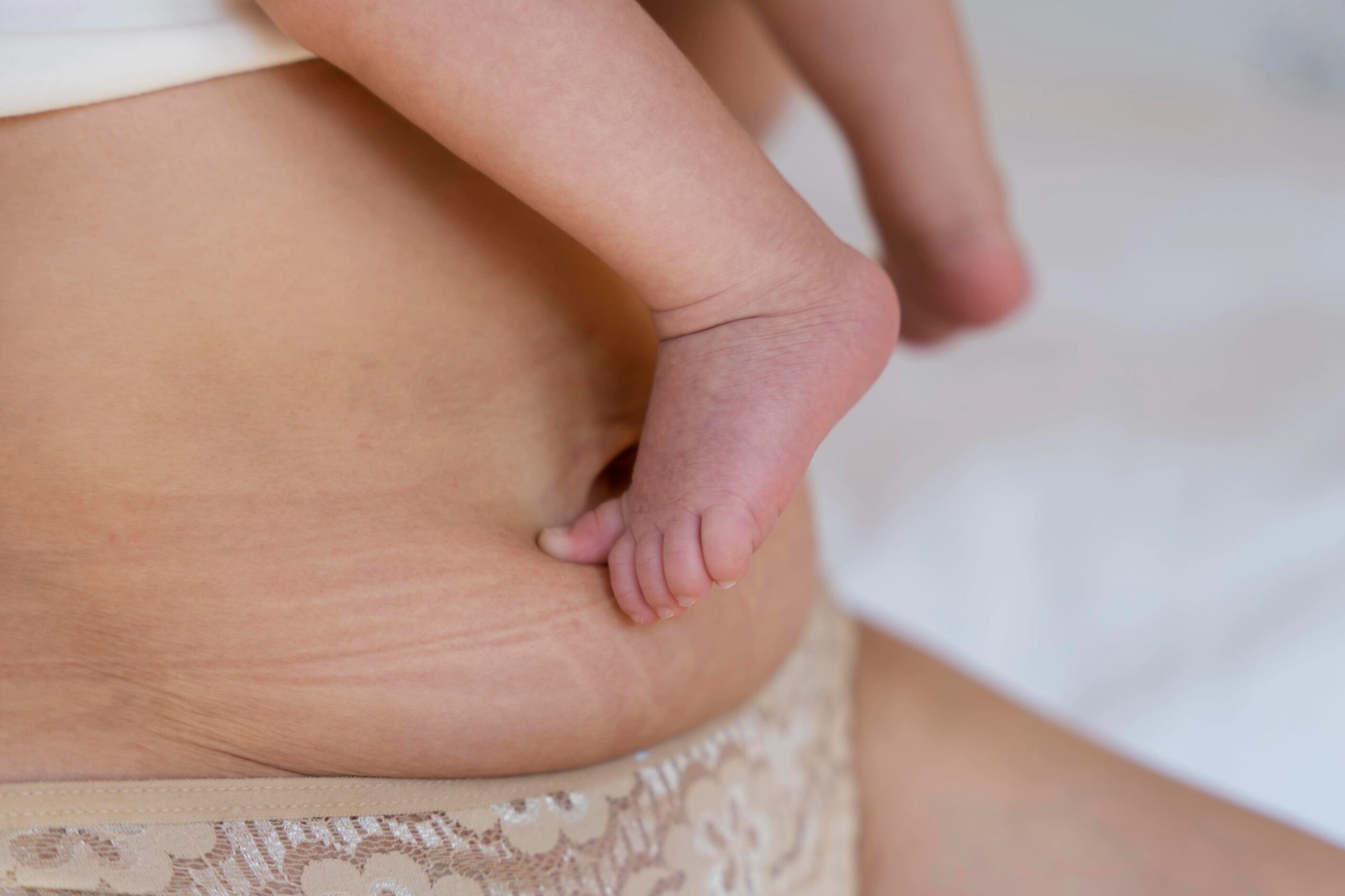
Excess Skin around the Belly after Pregnancy
After pregnancy, many women experience extra skin around their abdomen. The reason behind this condition is that during pregnancy, the skin and the tissues within it are stretched significantly to accommodate the growing baby.
Causes of Post-Pregnancy Excess Skin
- Skin elasticity: Skin elasticity plays an important role in its ability to stretch and then return to its original state. The skin grows a lot during pregnancy, and in rare cases, it may not retract completely later.
- Genetics: The way the skin reacts to stretching is heavily influenced by genetics. Some women are genetically predisposed to have more elastic skin.
- Weight gain rate: Rather than constant weight gain, rapid weight gain can cause skin elasticity to stretch. Equally, rapid postpartum weight loss can prevent the skin from having enough time to contract again.
- Number of pregnancies: Multiple pregnancies can result in extra stretch, making it harder for the skin to recover from pregnancy.
- Collagen and Elastin: The structural and elastic components of skin are proteins called collagen and elastin. The breakdown of these proteins during pregnancy can cause the skin to become less firm.
- Age: Younger women skin is generally more elastic and heals faster than older women.
Prevention and Management
- Healthy diet: A balanced diet high in vitamins and minerals, especially zinc, vitamins C and E, and foods that increase collagen production will help keep your skin healthy.
- Moisturizing and Hydration: During pregnancy, maintaining skin elasticity can be achieved by keeping the skin well hydrated and moisturized.
- Skin firming treatments: Collagen, hyaluronic acid, and retinoid are among the ingredients in over-the-counter creams and lotions that can help increase skin elasticity.
- Gaining a healthy weight: Reducing the amount of skin stretching during pregnancy can be accomplished by gaining a healthy weight. It is important to heed the advice of medical experts regarding weight gain.
- Postpartum Exercise: Regular exercise after childbirth can help tone abdominal muscles and reduce the appearance of excess skin. Pay special attention to exercises that strengthen the core, such as planks, bridges and pelvic tilts.
Medical and Surgical Options
- Abdominoplasty (Tummy Tuck): A surgical procedure such as a tummy tuck can tighten the abdominal muscles and remove loose skin in people with a lot of excess skin. It is often used as a last option after further approaches have been exhausted.
- Laser Therapy: By increasing skin elasticity and generating collagen, laser treatment can reduce the appearance of excess skin.
- Radiofrequency Treatments: These procedures heat the deeper layers of the skin using energy waves to stimulate collagen production and tighten the skin.
- See a Dermatologist or Plastic Surgeon: A consultation with a dermatologist or plastic surgeon can be helpful for individualized guidance and treatment options.
Emotional and Psychological Considerations
Many women find it emotionally difficult to deal with excess skin after giving birth. It is necessary:
- Seek Help: Finding emotional support and coping mechanisms can be achieved by talking with other mothers, attending support groups, or seeing a counselor.
- Emphasis on General Health: Putting general health and well-being ahead of physical appearance can result in a more satisfying postpartum period.
- Exercise Self-Compassion: Recognizing that these changes are a normal aspect of the postpartum phase can help you accept yourself.
After pregnancy, many women deal with the frequent problem of excess skin around their abdomen, but with the right strategies it can be dealt with properly.