Renel Failure in Pregnancy
When your kidneys stop working properly, you have kidney failure. The risk of complications increases significantly in pregnant patients with renal failure. For people who have had a previous kidney transplant, the prognosis is generally better.
There are two main types of Renal Failure.
- Acute Kidney Injury AKI
- Chronic Kidney Disease CKD
Acute Kidney Injury AKI
AKI, or pregnancy-related acute kidney damage, is a major global cause of morbidity and death in both the mother and the fetus in young women. The etiology of AKI differs by region and health resource accessibility. AKI during pregnancy in poor nations is primarily caused by severe sepsis from septic abortions. Pregnancy related hypertension problems and bleeding are two other causes of AKI.
Chronic Kidney Disease CKD
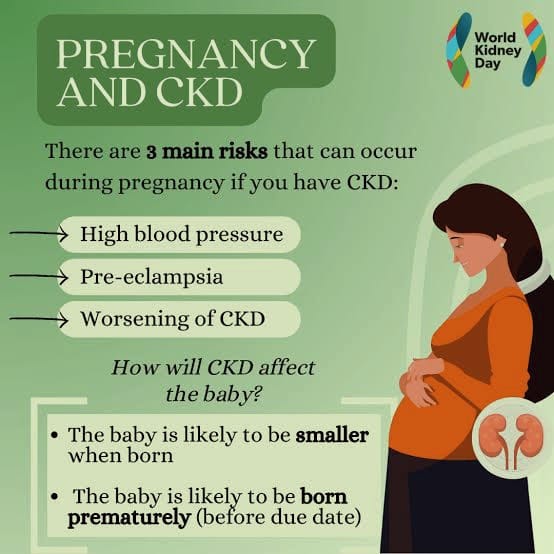
Preeclampsia, premature delivery, low birthweight, and an increase in overall mortality are among the unfavorable maternal and fetal outcomes that women with chronic kidney disease (CKD) are more likely to experience during pregnancy than pregnant women without CKD. Renal function may deteriorate in women with advanced CKD. In landmark research, 31% of women saw a reduction in renal function that lasted six months after giving birth, while 51% of women with Scr of at least 1.4 mg/dl during pregnancy experienced no change in GFR. The study included 67 women (with 82 pregnancies). Pregnant women with an antepartum Scr of more than 2.0 mg/dl were most vulnerable to lose kidney function.
Chromic Kidney Disease and Pregnancy CKD
A blood test can forecast the combined effects of pregnancy and chromic kidney disease on your health. The creatinine level that is measured by this test might reveal how well your kidneys are functioning. To determine your estimated glomerular filtration rate (eGFR), your blood creatinine level is obtained together with your age, ethnicity, and occasionally your height and weight. A higher eGFR indicates greater kidney function and a higher likelihood of a smooth and healthy pregnancy.
Loss of renal function may occur as a result of kidney disease during pregnancy, especially if there is concurrent hypertension and proteinuria. Even mild cases of chronic kidney disease increase the risk of preterm delivery, small-for-gestational-age neonates, and preeclampsia. Carefully controlling hypertension and proteinuria when feasible, as well as starting preeclampsia preventative measures like taking aspirin, are techniques to optimize pregnancy outcomes. Requirements include avoiding nephrotoxic and teratogenic drugs and taking into account renal dosage of routinely used drugs.
Chronic kidney disease patients should be delivered according to standard obstetric guidelines; nevertheless, regular prenatal evaluations by a skilled, interdisciplinary team are preferable for the treatment of this patient group, which is especially sensitive. Partners in combined clinics where both specialists can make joint management decisions are usually very helpful. Obstetricians are an essential part of this team, managing each stage of pregnancy to optimize both maternal and neonatal outcomes.